
The Trial Process
How to approach trials?
It’s that’s time of year again when pro-club academies and Emerging Talent Centres (ETCs) are inviting players in to trial to potentially earn themselves a place in their programmes.
But how do you approach these sessions? How do you prepare your child to be at their best? How do they stand out from the crowd?
The truth of course is that there is no guarantees during the trial process. Sometimes you will play well and be recognised, have a bad day and not be successful, or even play well and still not get noticed.
Each talent centre will have their own structure and approach to these trials, some may suit your footballers more than others. Remember that the coaches watching are human too, they are trying their best to look for talent. Obviously their ambition is to find the most promising players, but sometimes they will get it wrong too. Other times they may just be looking for something different than what you are offering. So try not to take it personally if you don’t end up with the result you are hoping for. There will be other opportunities and generally the best players get spotted eventually.
So here is a little guide from my experience delivering these trials days and what you are likely to face.
Firstly the coaches often aren’t looking for a specific position, especially in the foundation phase (ages 5-12)with the obvious exception of goalkeepers. They are mostly looking for the best all-round player that can be moulded and shows potential to improve. “I didn’t play in my best position” is not an excuse, if you’re not happy with your position have the confidence to speak with the coach, but remember the best players will often standout anyway.
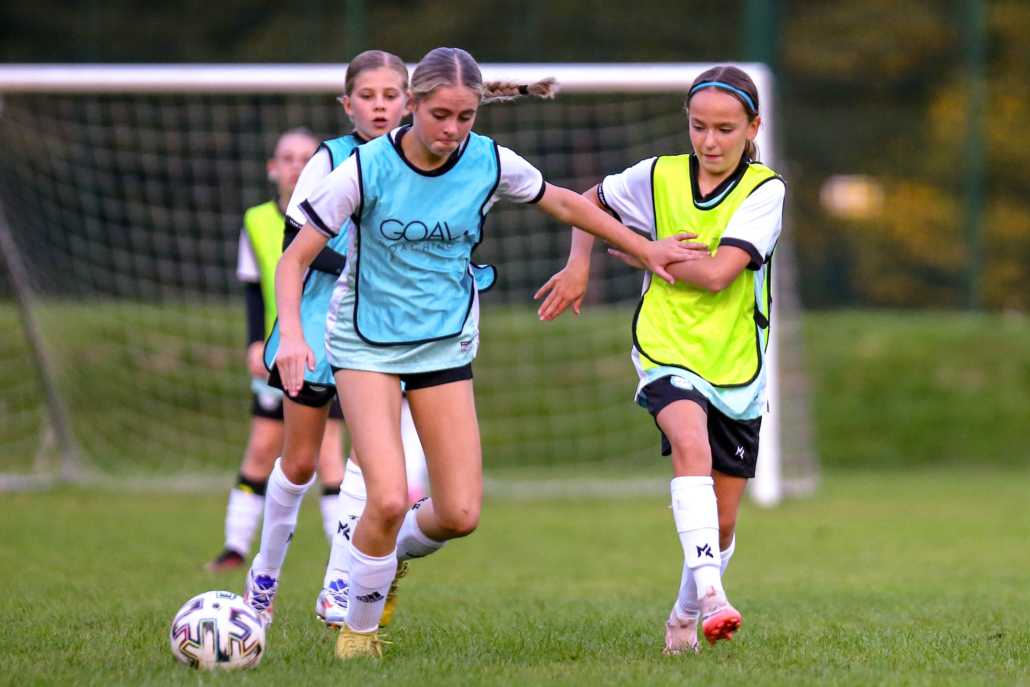
A great way for coaches to identify these players is to put them into 1v1 situations. This is an easy way to see directly who comes out on top between 2 players. Look for the coaches to mix these pairings after a short while to test if a player can still dominate against a stronger opponent. Right off the bat this should tell the coaches who can defend and attack in 1v1 duels. Expect these pairings to grow to 2v2 or 3v3 to add an extra element of attacking and defending as a unit, with more decisions for the players.
There may be a technical element or unopposed practice that will help the coaches to identify the technique level of a player, how well they can strike a ball, or judge the weight of a pass.
Some centres may introduce a more physical element that tests the athletic ability of the player. This could be a short sprint or an intense practice to test the durability and stamina of the player.
Finally the biggest opportunity to impress is in the games. This is usually the last and most common part of the trial where a player gets to showcase all of their skills in a match based environment.
So here are a few tips that may help you standout that little bit more from the rest. These are only small margins compared to your ability, but every little can help right?
- If possible, wear a shirt with your name on it. Immediately this makes you instantly recognisable to the coaches.
- Look the part, dress like you mean business.
- Avoid wearing another pro-clubs kit. National kits, your own club kit, or a neutral sports brand should be fine. If you’re trialling at Celtic and it comes down to you or the player in the Rangers kit…..who do you think they will likely choose?
- What makes you memorable? This could be anything from your head-band to your ankle tape, something that catches the eye.
Of course none of these things matter in the grand scheme of things, but it might just be the reason a coach remembers that it was you who scored that wonderful goal.
Those are the little things to help you be noticed, but none of that matters if your play isn’t good enough. So how can you be prepared to give your best or as close to it as possible?
- Rest before the trial. Doing 1:1s or playing a match before the trial is not the best preparation. You’re going to need all of that energy, so save it and have a good breakfast.
- Try to relax on your way across, what helps you to prepare your mind ready to play? Music? talking about the game? Whatever helps to calm your nerves.
- Be polite, engage with the coaches. This may settle your nerves a little but also makes a good impression right from the start.
- Finally – Control the controllable. You cannot help how good the goalkeeper is. Whether luck is on your side. Whether the team you get put on is a high or low standard. If you get put in a position you’re not so familiar in. You CAN control how you respond. Will you keep fighting to win if your team is 5-0 down? Will you keep pressing to score more if you are winning? Will you encourage your teammates? Will you be the first to come in when the coach calls? Will you work until the last moment? Will you be a good person to your teammates and the coaches? If you can do all of those things then you can walk off that pitch with your head held high, knowing that you did everything in your power. What will be will be.
Don’t make excuses if you don’t make it. Work hard for the next time and show the coaches that they made a mistake not picking you. And remember these trials are also for the club to impress you too. Are they run well? Are the coaches friendly and professional? Is the setup well organised? You may have multiple choices at the end of the process and this may be your opportunity to assess them and find the best fit for you.
Finally from myself and everyone at Team Goal. I wish you all the very best throughout this process, and please come to us if you need any further advice or we can help in any way.
Martin